
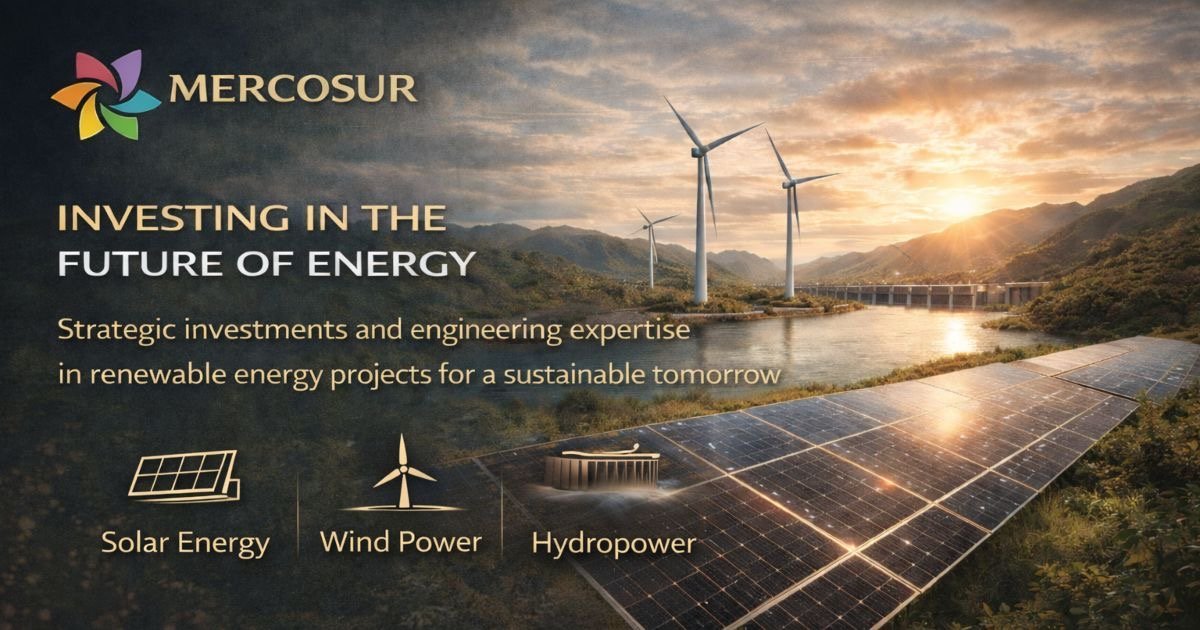
Serbia’s next renewable-energy opportunity is no longer only a question of building separate wind farms, solar parks or battery assets. The more bankable opportunity is the creation of an integrated verified green electricity platform that connects 100 MW wind, 100 MW solar, 100 MW battery storage, industrial offtake, lender-grade documentation and CBAM-oriented export readiness. For banks, this is not simply an energy-transition story. It is a credit-structuring opportunity built around predictable demand, hard infrastructure, contracted industrial users and a clearer route to debt service.
The target market is particularly relevant in Serbia because the country hosts a growing base of European- and Chinese-owned manufacturing companies, including industrial groups active in metals, mining, steel-related processing, automotive components, machinery, chemicals, building materials, logistics, data centres and export-oriented production. These companies are not only electricity consumers. They are potential anchor customers for bankable green electricity contracts, battery-backed power services and CBAM-ready product positioning. Their electricity procurement is becoming part of their export competitiveness, not just an operating cost.
For lenders, that changes the financing conversation. A standalone wind or solar project exposed mainly to merchant prices creates one risk profile. A standalone merchant battery exposed mainly to price spreads, ancillary-market assumptions and cycling revenues creates another. A behind-the-meter battery financed only against one factory’s savings creates a third. But a platform combining renewable generation, FTM storage, BTM storage, industrial offtake, metered energy data and CBAM-oriented documentation gives banks a broader structure to underwrite. It allows the revenue stack to be separated, contracted, stress-tested and allocated across different risk buckets.
The first layer is the 100 MW wind case study. A wind project of this scale in Serbia can produce a meaningful renewable electricity volume, potentially in the range of 250–330 GWh per year, depending on the final wind resource, turbine model, hub height, availability, wake losses, grid curtailment and lender-approved energy-yield assessment. Indicative CAPEX may sit around €125 million–€165 million, depending on turbine procurement, civil works, substation scope, roads, grid connection, development costs, owner’s costs and financing conditions. From a lender perspective, the bankability question is not only whether the wind resource is strong. It is whether the project can convert variable production into stable contracted cash flow.
That is where industrial offtake matters. A European- or Chinese-owned manufacturing company in Serbia may not want a plain wind PPA that transfers all shape risk, imbalance risk and delivery mismatch to the buyer. It will usually need a more bankable electricity product: renewable power supported by forecasting, balancing logic, storage optionality, metering records and a credible allocation methodology. For the wind owner, this can support stronger pricing and lower merchant exposure. For the industrial buyer, it creates a more useful electricity product linked to production needs and export documentation. For banks, it creates a clearer revenue base than pure spot-market sales.
The second layer is the 100 MW solar case study. A Serbian solar project of this size may generate roughly 125–155 GWh per year, depending on irradiation, module selection, DC/AC ratio, tracker use, soiling, inverter design, degradation and grid constraints. Indicative CAPEX may sit around €55 million–€80 million, subject to land, grid connection, permitting, modules, inverters, mounting structures, owner’s costs and financing structure. Solar is attractive to lenders because it is modular, relatively fast to build and increasingly cost competitive. Its financing weakness is the concentration of output during daylight hours, especially as regional markets see growing solar penetration and midday price pressure.
A solar project becomes more lender-friendly when it is connected to industrial load and battery flexibility. Many manufacturing sites have daytime electricity demand, making solar more naturally aligned with production schedules than purely merchant power. But the bankability improves further when the solar output can be shifted, stored or allocated through a BTM or FTM battery layer. A lender can then model not only wholesale revenue, but also contracted industrial supply, avoided grid costs, peak-shaving savings, green electricity premiums and documentation value. Solar is no longer just an intermittent generator. It becomes part of a structured industrial energy supply product.
The third layer is the 100 MW BESS case study. A base battery configuration could be 100 MW / 200 MWh, with a longer-duration option such as 100 MW / 400 MWh depending on the intended commercial use. CAPEX for a 100 MW / 200 MWh BESS may sit around €60 million–€95 million, while a longer-duration structure would require a higher investment envelope depending on battery chemistry, containers, power conversion systems, transformers, grid works, fire-safety systems, control architecture, land, civil works and augmentation strategy. For banks, the battery is the most complex but potentially most valuable part of the platform.
A battery’s financing cannot rely on a simplistic revenue assumption. Lenders will want to separate contracted revenue from merchant upside. The contracted layer may include industrial availability payments, tolling fees, capacity reservation, peak-shaving services, backup resilience, renewable firming or green electricity supply support. The merchant layer may include arbitrage, balancing, ancillary services, negative-price capture or portfolio optimisation. The financing model should not blend these into a single optimistic revenue line. It should show exactly which cash flows are contracted, which are market-exposed, which are dependent on dispatch, and which are linked to the industrial customer’s actual consumption profile.
This distinction is critical for debt sizing. Banks will typically lend against cash flows they can understand, verify and stress. A contracted industrial offtake backed by a creditworthy manufacturing company may support stronger debt capacity than merchant arbitrage alone. A BTM battery inside a factory may support debt only if the savings are measurable, enforceable and protected through contract terms. An FTM battery may support debt if the market rules, grid access, dispatch rights and revenue assumptions are credible. A hybrid FTM-BTM structure can be stronger, but only if the documentation clearly separates each revenue stream and prevents double counting.
A lender-grade model for this platform should therefore focus on DSCR, LLCR, debt tenor, debt sculpting, reserve accounts, cash sweep, minimum contracted revenue, merchant haircut, battery degradation, augmentation cost, availability, curtailment, grid delay, connection cost, EPC liquidated damages, warranty limits, insurance, termination payments, offtaker credit quality and step-in rights. The base case may look attractive, but the downside case is what will decide bankability. Banks will ask what happens if industrial load falls, if a customer delays production, if wholesale spreads narrow, if the battery cycles less than expected, if degradation accelerates, if grid energisation slips by 12–18 months, or if a PPA is renegotiated.
This is why European- and Chinese-owned manufacturing companies in Serbia are so important to the platform. They can act as anchor demand, but they also create lender due-diligence requirements. Banks will examine their financial strength, Serbian operating history, parent-company support, export orientation, electricity intensity, contractual commitment, termination rights and ability to absorb green electricity premiums. A strong industrial buyer can materially improve the credit case. A weak or short-term buyer can undermine it. The platform must therefore be designed not only as an engineering solution, but as a credit product that can satisfy bank committees.
The CBAM angle adds another layer of lender interest. CBAM-ready electricity documentation does not automatically make an industrial product carbon-free, nor does it replace formal emissions reporting obligations. But it can create a stronger evidence base for the electricity component of embedded-emissions discussions, customer procurement requirements and export-market positioning. For industrial companies selling into EU-linked supply chains, the ability to demonstrate structured renewable electricity procurement, metered consumption, battery-backed optimisation and auditable allocation can become commercially valuable. For lenders, that value matters because it supports customer stickiness, contract durability and willingness to pay.
The verified green electricity framework should therefore be built as a data and control architecture, not as a marketing claim. It should include generation metering, battery metering, grid import and export records, industrial consumption data, dispatch logs, allocation rules, Guarantees of Origin or equivalent electricity-origin documentation where applicable, SCADA records, settlement-period reconciliation and audit trails. The purpose is to allow the producer, industrial customer, lender and verifier to understand how renewable electricity is generated, stored, allocated and consumed. This is the difference between generic green procurement and bankable green electricity infrastructure.
From a lender perspective, the strongest structure is likely to combine a base contracted revenue layer with controlled merchant upside. The wind and solar projects can support long-term industrial PPAs or green electricity supply agreements. The BESS can support tolling, availability payments, savings-sharing, balancing services and limited market trading. The industrial client can contract for electricity, flexibility, resilience and documentation services. The lender can size debt primarily against contracted revenues, while treating merchant upside as a cash sweep, reserve-building mechanism or equity upside rather than core debt-service support.
The EPC and completion framework is equally important. Banks will require a clear interface between the wind EPC, solar EPC, BESS EPC, grid-connection contractor, SCADA integrator, metering provider and owner’s engineer. Interface risk is one of the biggest weaknesses in hybrid energy platforms. A battery may be technically complete while the grid connection is delayed. A solar plant may be ready before the industrial offtake contract becomes effective. A wind project may face curtailment or forecasting issues before the BESS dispatch system is fully integrated. These risks must be reflected in the EPC structure, liquidated damages, completion tests, performance guarantees and commissioning plan.
Commissioning is not a formality in this model. It is a bankability milestone. The platform must prove that the wind, solar, battery and industrial metering systems work together. It must show that dispatch commands are executed, metering data is recorded, energy allocation is traceable, battery performance is within warranty limits, grid-code requirements are satisfied and industrial supply obligations can be met. For banks, commissioning evidence is the bridge between construction risk and operating cash flow. For industrial customers, it is the proof that the green electricity product is operationally real.
Environmental and ESG due diligence must also be structured early. Wind projects require biodiversity review, noise analysis, land-use checks, construction monitoring, access-road planning and community-risk management. Solar projects require land screening, drainage review, panel lifecycle planning, biodiversity assessment and grid-impact analysis. Battery projects require fire-safety design, hazardous-material handling, emergency-response planning, recycling strategy, insurance review, noise assessment and occupational-safety procedures. Industrial clients also need governance around energy claims, ESG reporting and CBAM-related documentation. Banks will not treat these as side issues; they are part of the credit file.
The FEED approach is therefore the correct starting point. The platform should begin with a lender and industrial-user question: what technical configuration creates a financeable electricity product for export-oriented manufacturing in Serbia? The answer then determines battery duration, wind and solar allocation, grid interface, BTM installation scope, metering architecture, dispatch logic, contractual structure and documentation requirements. FEED should not be a narrow engineering exercise. It should be the stage where engineering, finance, offtake, ESG and CBAM-readiness are integrated into one bankable development route.
For banks, this approach reduces ambiguity. Instead of receiving a project that simply claims “green electricity” and “battery upside,” lenders receive a structured investment case. They see who buys the electricity, what part of the revenue is contracted, how the battery is dispatched, what data supports the green electricity claim, what downside scenarios have been tested, what EPC guarantees exist, what environmental permits are required, what grid risks remain and what covenants protect the debt. That is the difference between a promising concept and a financeable platform.
For European- and Chinese-owned manufacturing companies in Serbia, the platform offers a practical way to align production economics with export-market expectations. These companies need power that is reliable, cost-aware and increasingly traceable. They may also need to show EU customers, group headquarters and financiers that Serbian production is moving toward cleaner electricity inputs. A verified green electricity platform can support that transition without forcing each factory to become an energy developer on its own. The platform gives them access to renewable supply, storage-backed flexibility and a documentation framework through a structured commercial agreement.
The commercial proposition is therefore not simply 100 MW wind, 100 MW solar and 100 MW BESS. It is a bankable energy and documentation platform for Serbia’s industrial exporters. Wind provides volume. Solar provides daytime supply. Batteries provide flexibility and control. Industrial customers provide contracted demand. Lenders provide discipline. FEED converts the concept into a credible investment case. CBAM-readiness gives the model strategic relevance for EU-facing manufacturing.
Clarion.Engineer can position itself at the centre of this development model through pre-FEED and FEED structuring, bankability design, lender dashboards, CAPEX/OPEX modelling, DSCR and LLCR analysis, PPA and tolling architecture, BESS sizing, grid-readiness review, technical due diligence, EPC interface review, commissioning-readiness planning, SCADA and metering requirements, industrial load analysis, CBAM-ready electricity documentation, and Environment/ESG integration. The role is to translate a complex hybrid energy concept into a format that banks, industrial clients, EPC contractors and project owners can actually use.
The value of Clarion.Engineer is interdisciplinary execution. The platform needs engineers who understand wind, solar, batteries, grid connection, industrial loads, metering, SCADA and commissioning. It also needs advisors who understand debt sizing, lender covenants, offtake credit, contract bankability, environmental risk, ESG expectations, CBAM exposure and export-market pressure. Clarion.Engineer brings these disciplines together through a FEED-driven delivery model covering energy development, commissioning, CBAM framework integration and Environment/ESG advisory.
Clarion.Engineer — The Engineers That Speak Finance.